Custom-built by professional educational consultants. Every course meets or exceeds state standards, with room to challenge and differentiate for your child. Modules are subject to change based on enrollment.
Our English Language Arts curriculum integrates theme-based units of language arts instruction with the Institute for Excellence in Writing’s (IEW) writing method. Our approach emphasizes building knowledge by teaching lessons through units in history, geography, science, and the arts.
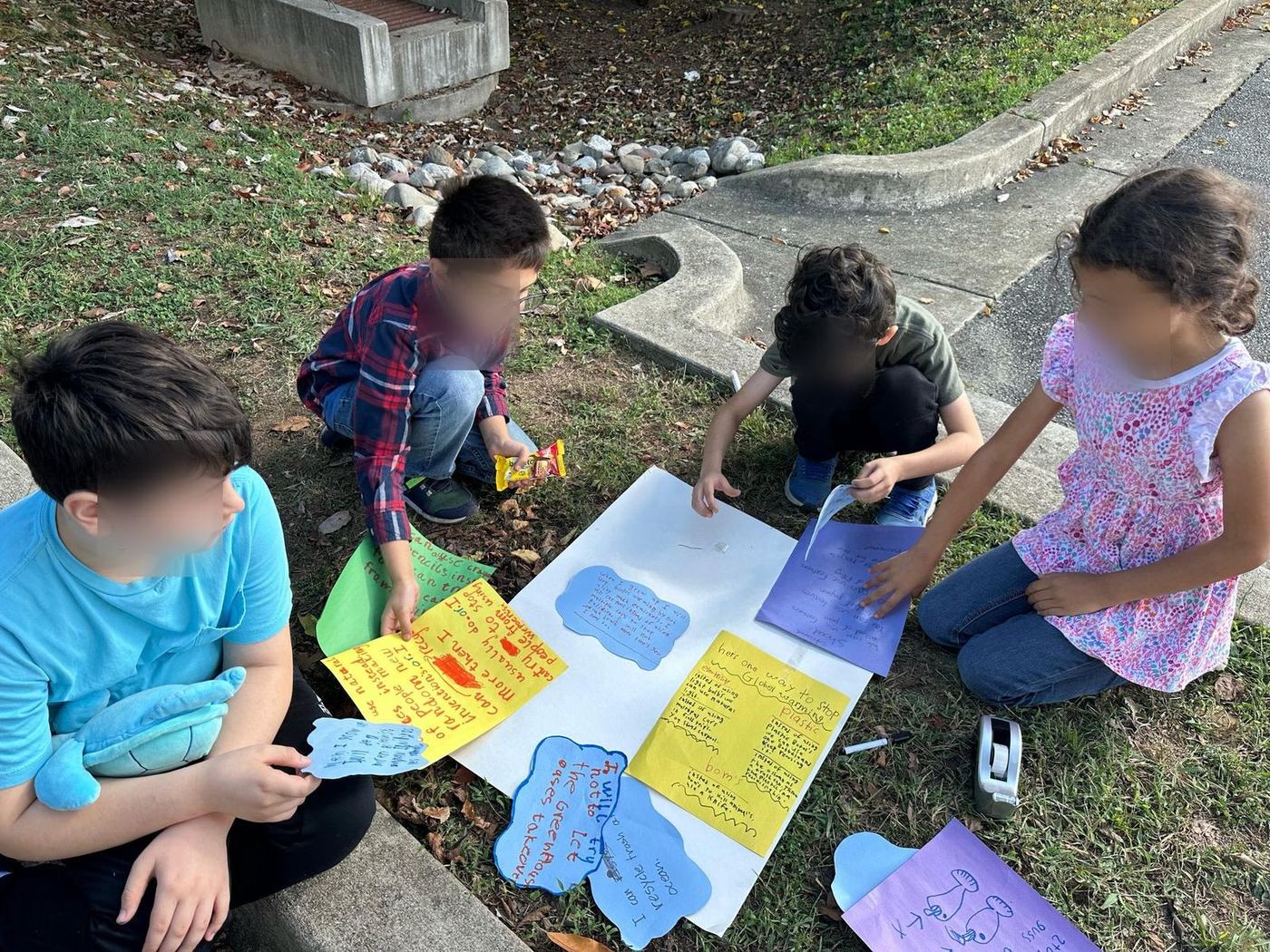
To make the lessons engaging, students work through a central project that extends each lesson and cements their understanding of the material, while engaging with texts through read-alouds, discussions, and independent reading and writing. In each term, students cover one third of a full year’s curriculum, carefully differentiated for each student’s level and grade.
1 hr 30 min
Twice per week
Mon & Wed, 9:00–10:30am
$175 / month
Grades K–1 · Focus Areas
Listening and Speaking: students actively participate in discussions, following agreed-upon rules and asking clarifying questions. They learn to express themselves clearly, using narrative language to describe experiences and retell stories. Grade 1 students engage in longer conversations and oral presentations.
Reading: students develop print awareness, recognizing letters, sounds, words, and sentences. They practice phonemic awareness skills, such as identifying and manipulating sounds in words. Grade 1 students learn phonics, decoding and encoding words, and read increasingly complex texts.
Writing: students begin by drawing pictures to represent stories and express opinions, then progress to shared writing exercises, adding details and creating titles. Grade 1 students write narrative, informative, and persuasive texts independently, using phonemic spelling.
Language Conventions: students learn basic spelling conventions, form letters, words, and sentences, and use capitalization and punctuation. Grade 1 students expand their knowledge of parts of speech, verb tenses, and sentence structures.
Reading Comprehension: students engage in read-aloud sessions, comprehending and discussing fiction, non-fiction, and poetry. They identify details, make predictions, and answer questions about the text. Grade 1 students analyze texts more deeply, comparing and contrasting, making connections, and identifying literary language.
This curriculum provides a strong foundation in English Language Arts, nurturing essential literacy skills and fostering a love for reading and writing.
1 hr 30 min
Twice per week
Mon & Wed, 9:00–10:30am
$175 / month
Grades 2–3 · Focus Areas
Listening and Speaking: students actively participate in discussions, ask questions, and give presentations. They learn to follow multi-step directions, articulate clearly, and use visual aids to enhance communication. Grade 3 students progress to preparing for discussions, building upon others’ remarks, and switching between formal and informal English.
Reading Comprehension: students understand and analyze diverse texts, including fiction, non-fiction, and poetry. They summarize key points, make inferences, identify literary devices, and interpret visual elements. Grade 3 students delve deeper into complex texts, analyze text structures, and evaluate arguments.
Phonics: students master letter-sound relationships, progressing from single-syllable to multi-syllable words. They learn to decode irregularly spelled words and expand their vocabulary with high-frequency and academic terms.
Writing: students craft narrative, informative, and persuasive pieces, applying appropriate grammar, punctuation, and spelling. They learn to organize information, use linking words, and follow a structured writing process. Grade 3 students conduct research, gather information from diverse sources, and synthesize findings in reports.
This curriculum gradually increases the complexity and rigor of instruction as students progress from Grade 2 to Grade 3.
1 hr 30 min
Twice per week
Mon & Wed, 9:00–10:30am
$175 / month
Grades 4–5 · Focus Areas
Listening and Speaking: students actively participate in discussions, preparing in advance and fulfilling specific roles. They learn to identify key ideas, distinguish them from personal opinions, and restate information from various sources. Presentations incorporate visual aids, and students practice switching between formal and informal English. Grade 5 students focus on drawing conclusions from discussions and evaluating a speaker’s claims.
Reading: students decode words using phonics and word analysis skills, focusing on multisyllabic words and applying knowledge of roots, prefixes, and suffixes. They practice fluent oral reading with appropriate expression. Comprehension encompasses analyzing complex fiction and non-fiction texts, summarizing main points, identifying themes, evaluating arguments, and comparing texts from different perspectives.
Writing: students write various types of texts, incorporating planning, research, editing, and revision. They analyze literature and informational texts in writing, demonstrating a deep understanding of literary elements and an author’s arguments. Short research projects involve gathering information from various sources, taking notes, and creating bibliographies. Grade 5 students additionally focus on paraphrasing, summarizing, and using advanced linking words and phrases.
Language Conventions: students master complex grammar rules, including various verb tenses and sentence structures. They expand their vocabulary, differentiating between literal and figurative language and recognizing idioms and proverbs. Spelling focuses on grade-level high-frequency words and applying known patterns and rules. Grade 5 students explore nuances in word meanings and grade-level academic terminology.
This curriculum prepares students for higher-level critical thinking, effective communication, and in-depth literary analysis as they transition from Grade 4 to Grade 5.
Core Course · Twice per Week
Mathematics
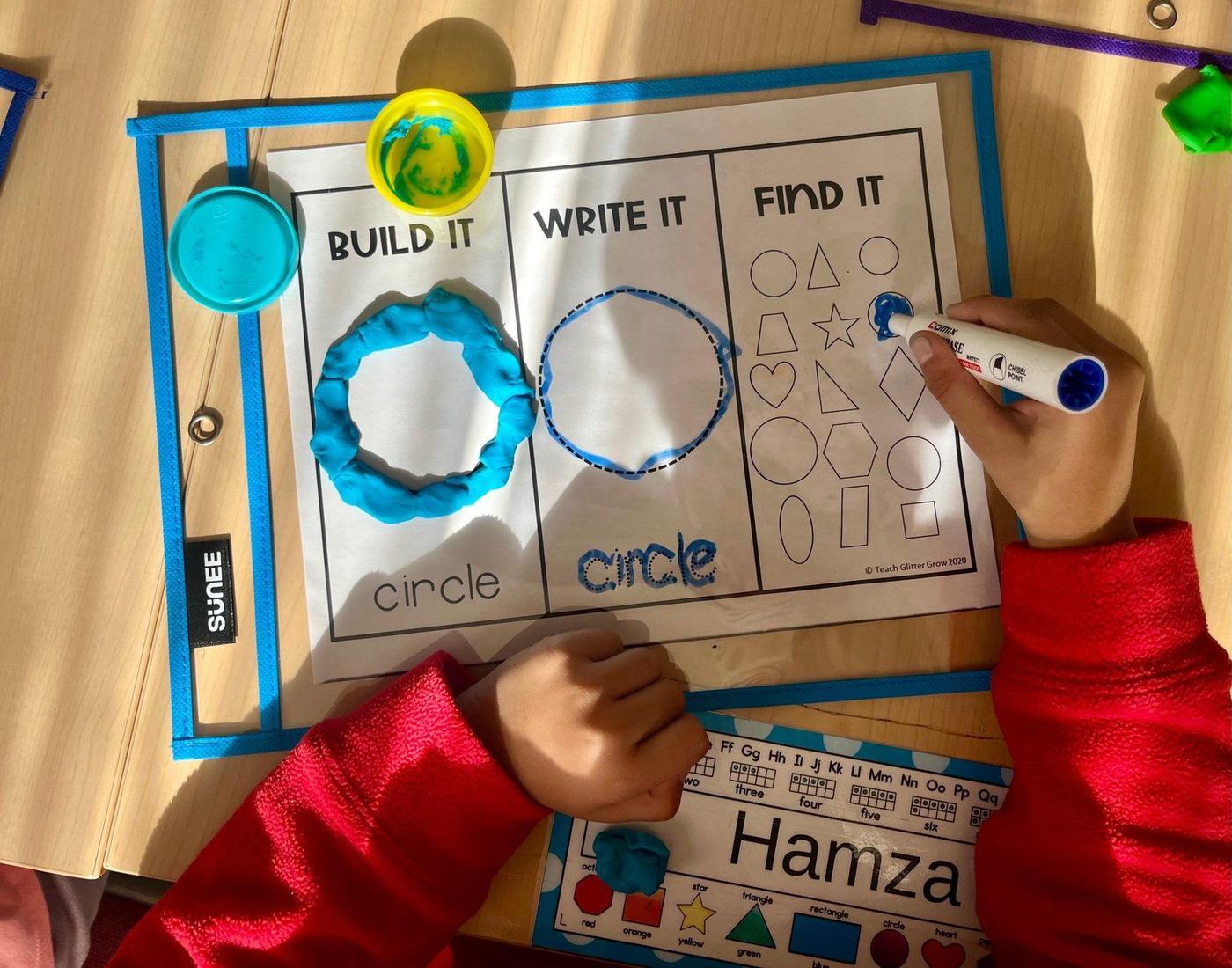
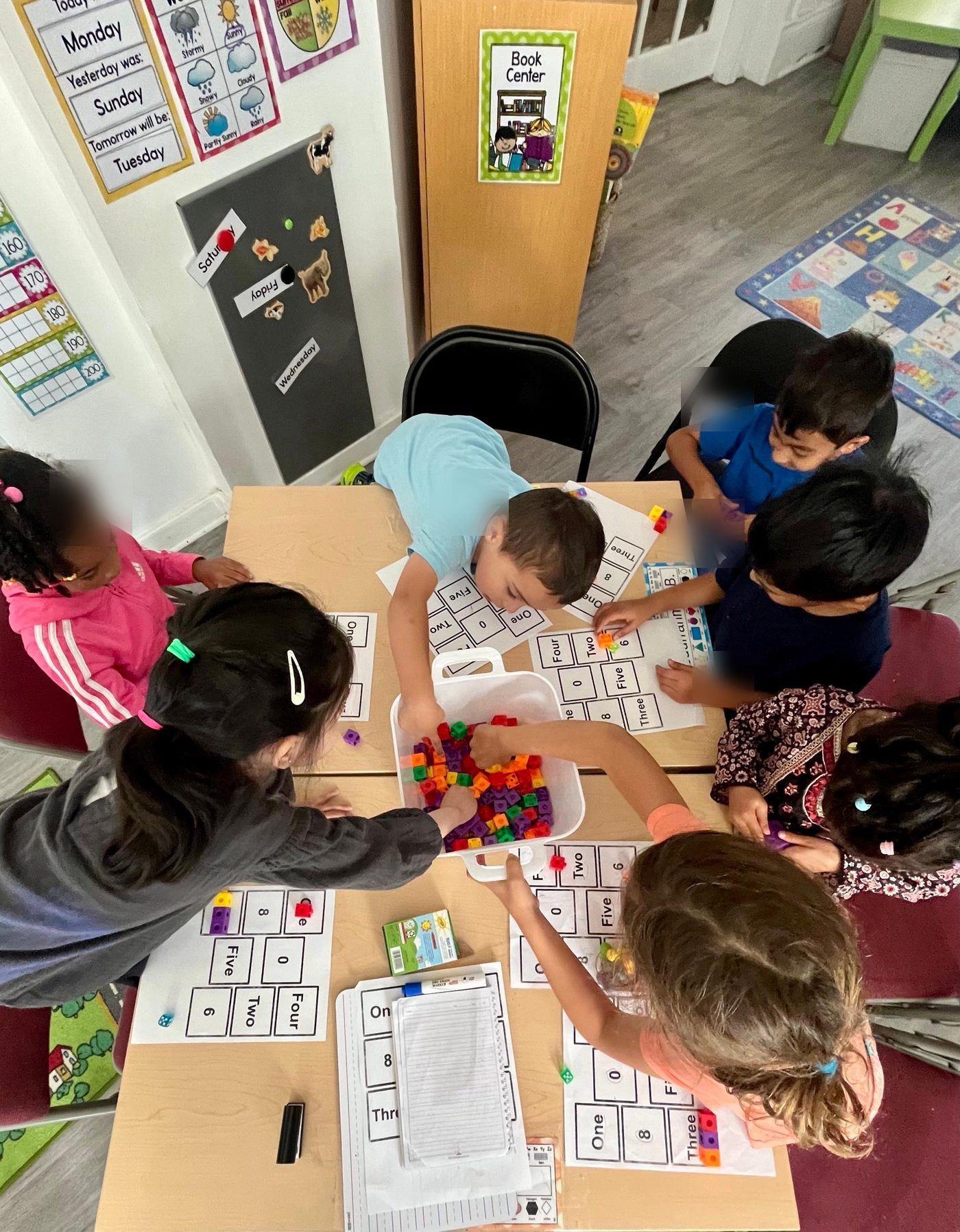
Our Mathematics curriculum is designed to keep students engaged through project-based learning while building mathematical reasoning, fluency, and understanding. In each unit, students learn new concepts, practice their skills through joint activities and independent work, and extend their knowledge through a central project that translates the class topic into real-world applications.
1 hr 30 min
Twice per week
Mon & Wed, 10:45am–12:15pm
$175 / month
Grades K–1
Our Mathematics curriculum for Grades K–1 focuses on building a strong foundation in number sense, operations, and basic geometric concepts.
In Kindergarten, students learn to count to 100, write numbers up to 20, and understand the relationship between numbers and quantities. They explore addition and subtraction within 10 using objects, fingers, drawings, and equations, and begin to develop place value understanding by working with numbers 11–19.
In Grade 1, students extend their counting sequence to 120, solve addition and subtraction problems within 20, and develop fluency with addition and subtraction within 10. They deepen their understanding of place value with two-digit numbers and begin to measure lengths and tell time. Throughout both grades, students engage with shapes, analyzing, comparing, creating, and composing them to build spatial reasoning skills.
1 hr 30 min
Twice per week
Mon & Wed, 10:45am–12:15pm
$175 / month
Grades 2–3
Our Mathematics curriculum for Grades 2–3 builds upon the foundational skills developed in earlier grades, expanding students’ understanding of operations, place value, measurement, and data.
In Grade 2, students fluently add and subtract within 20, work with equal groups of objects to gain foundations for multiplication, and explore place value with three-digit numbers. They measure and estimate lengths, tell time to the nearest five minutes, and solve word problems involving money.
In Grade 3, students multiply and divide within 100, solve two-step word problems using the four operations, and round whole numbers. They develop an understanding of fractions as numbers, measure time intervals in minutes, and represent and interpret data using scaled graphs. They also explore area and perimeter, relating them to multiplication and addition.
1 hr 30 min
Twice per week
Mon & Wed, 10:45am–12:15pm
$175 / month
Grades 4–5
Our Mathematics curriculum for Grades 4–5 deepens students’ understanding of number operations, fractions, decimals, measurement, and geometry.
In Grade 4, students use the four operations to solve multi-step word problems, gain familiarity with factors and multiples, and generalize place value understanding for multi-digit whole numbers. They extend their understanding of fractions, including equivalence and ordering, and begin to work with decimal notation. They also explore angle measurement and solve problems involving measurement and conversion of units.
In Grade 5, students continue to work with fractions, adding and subtracting with unlike denominators and multiplying and dividing fractions. They expand their understanding of decimals, comparing and rounding them, and delve into volume, graphing points on the coordinate plane, and classifying two-dimensional figures.
Core Course · Once per Week
Science
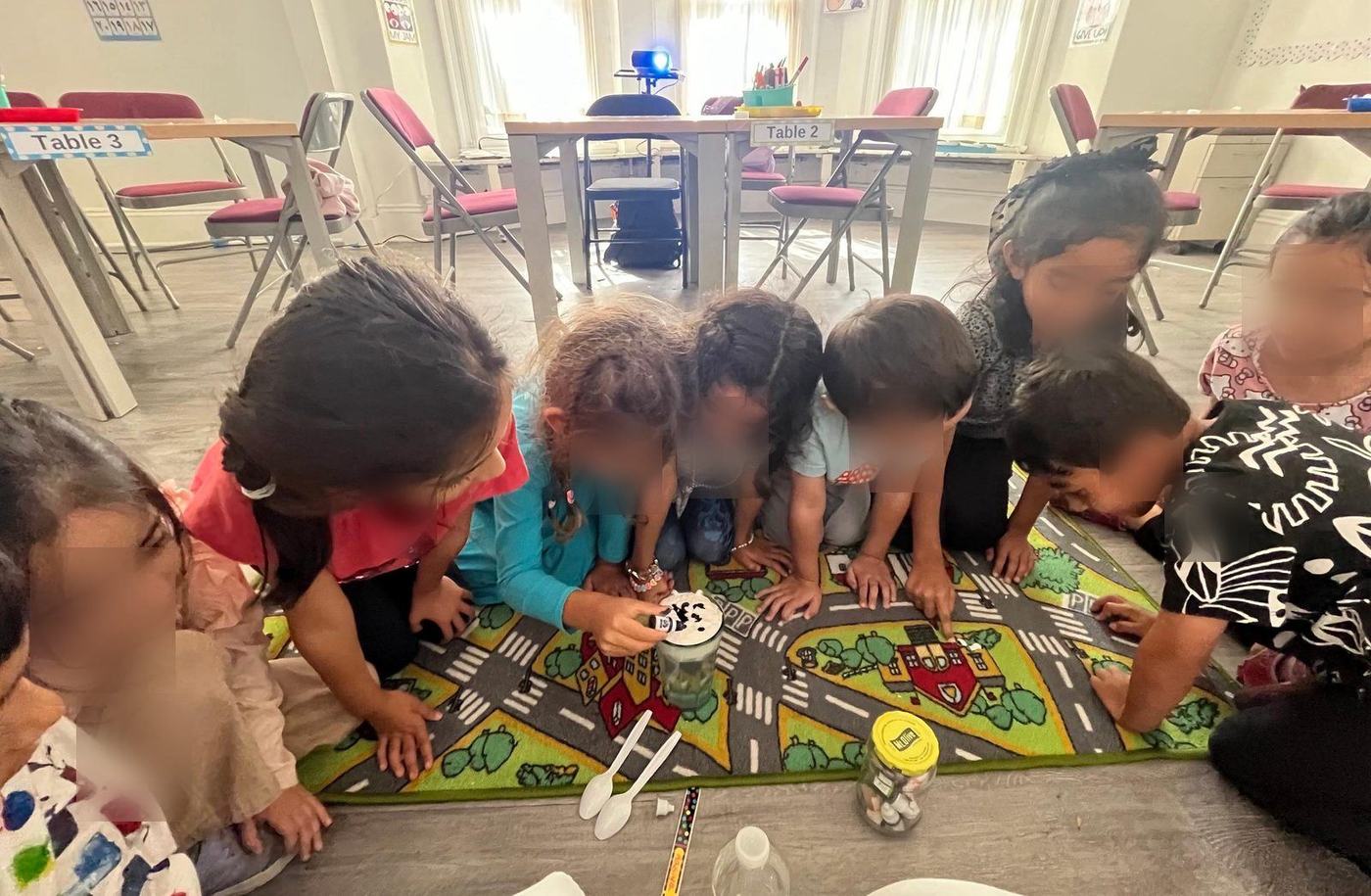
Our Science curriculum is a hands-on exploration of how our world works. Each term covers a unit in life science, physical science, or earth science. Through projects, experiments, and hands-on activities, students practice the scientific method while extending their learning. Real-world applications are emphasized, advanced students may design their own experiments, and the Next Generation Science Standards are covered for each grade level.
1 hr 30 min
Once per week
Tuesdays, 9:00–10:30am
$175 / month
Grades K–1
Students are introduced to the fundamental concepts of physical science, life science, and earth science. They explore pushes and pulls as forces, the needs of plants and animals, and the characteristics of different environments. They learn about weather patterns, the human body and its five senses, and the sun, moon, and stars. Through hands-on activities and observations, students develop a basic understanding of the natural world and their place within it.
1 hr 30 min
Once per week
Tuesdays, 9:00–10:30am
$175 / month
Grades 2–3
Building on earlier grades, students delve deeper into the properties of matter, life cycles, habitats, and Earth’s systems. They explore the different states of matter, how matter changes, and the basic structure of matter. They investigate the life cycles of plants and animals, their diverse characteristics, and how they adapt to their environments. They also learn about landforms, bodies of water, weather and climate, and the forces of electricity and magnetism, with an emphasis on hands-on investigation and scientific inquiry skills.
1 hr 30 min
Once per week
Thursdays, 9:00–10:30am
$175 / month
Grades 4–5
Students expand their understanding of scientific concepts, focusing on energy transfer, waves, Earth’s processes, and the human body. They explore different forms of energy, how energy is transferred and transformed, and the properties of waves, including sound and light. They investigate Earth’s layers, the rock cycle, plate tectonics, and natural hazards. They also learn about the use of natural resources for energy, the importance of environmental protection, and the human endocrine and reproductive systems, applying their knowledge to real-world problems.
Core Course · Once per Week
Social Studies
Our Social Studies curriculum spans world and American history and geography, complementing the topics of a typical secular curriculum with perspectives and history relevant to Islamic civilizations and traditions.
1 hr 30 min
Once per week
Thursdays, 9:00–10:30am
$175 / month
Grades K–1
Students are introduced to basic geographical concepts, such as maps, globes, continents, and the location of their community and state. They learn about Native American peoples, their ways of life, and their interactions with the environment. Students also explore early exploration and settlement of America, focusing on Columbus and the Pilgrims, and are introduced to key figures in American history and symbols like the American flag and the Statue of Liberty. The curriculum sparks curiosity about the world and different cultures, fostering a sense of community.
1 hr 30 min
Once per week
Thursdays, 9:00–10:30am
$175 / month
Grades 2–3
Students delve deeper into world history and geography, exploring early civilizations in Asia, the Americas, and ancient Greece and Rome, along with their geography, culture, and significant contributions. In American history, they study the Constitution, the War of 1812, westward expansion, the Civil War, and the concepts of immigration and citizenship. They are also introduced to key figures who fought for various causes, such as Susan B. Anthony and Martin Luther King, Jr. The curriculum fosters critical thinking and a deeper appreciation for the complexities of human societies.
1 hr 30 min
Once per week
Tuesdays, 9:00–10:30am
$175 / month
Grades 4–5
Students cover a wide range of topics in world and American history. They explore medieval Europe, the spread of Islam, early African kingdoms, and imperial China, then delve into the Renaissance and Reformation, examining the cultural, scientific, and religious changes of the time. In American history, they study the American Revolution, the Constitution, westward expansion, the Civil War, and Native American cultures and conflicts. They also learn the geography of the Americas and the world, including major landforms and bodies of water, building cultural awareness and a global perspective.
Core Course · Twice per Week
Islamic Studies & Qur’an
1 hr 30 min
Twice per week
Tue & Thu, 10:45am–12:15pm
$175 / month
A portion of the class is dedicated to instruction in Islamic Studies, covering five areas:
Aqeedah
Ibadaat: acts of worship and their fiqh
Seerah: the life of the Prophet ﷺ and Islamic history
Akhlaaq: morals and manners
Qur’anic vocabulary
Teachers instruct the children in these topics, and students engage in discussions, activities, and assignments related to the class topic. Students are grouped according to their ages and given age-appropriate extensions.
A second portion of the class is dedicated to Qur’an reading and memorization. At the beginning of the term, students are assessed for their Qur’an level. The text of Al Qaidah al Nooraniah is used for students learning to read Arabic, and these students also learn short surahs, building on their current knowledge. Students who have attained mastery in reading fluency and accuracy focus on memorization according to their individual levels.
Enrichment · Four Days per Week
Social Activities
1 hr 45 min
Four times per week
Mon–Thu, 12:15–2:15pm
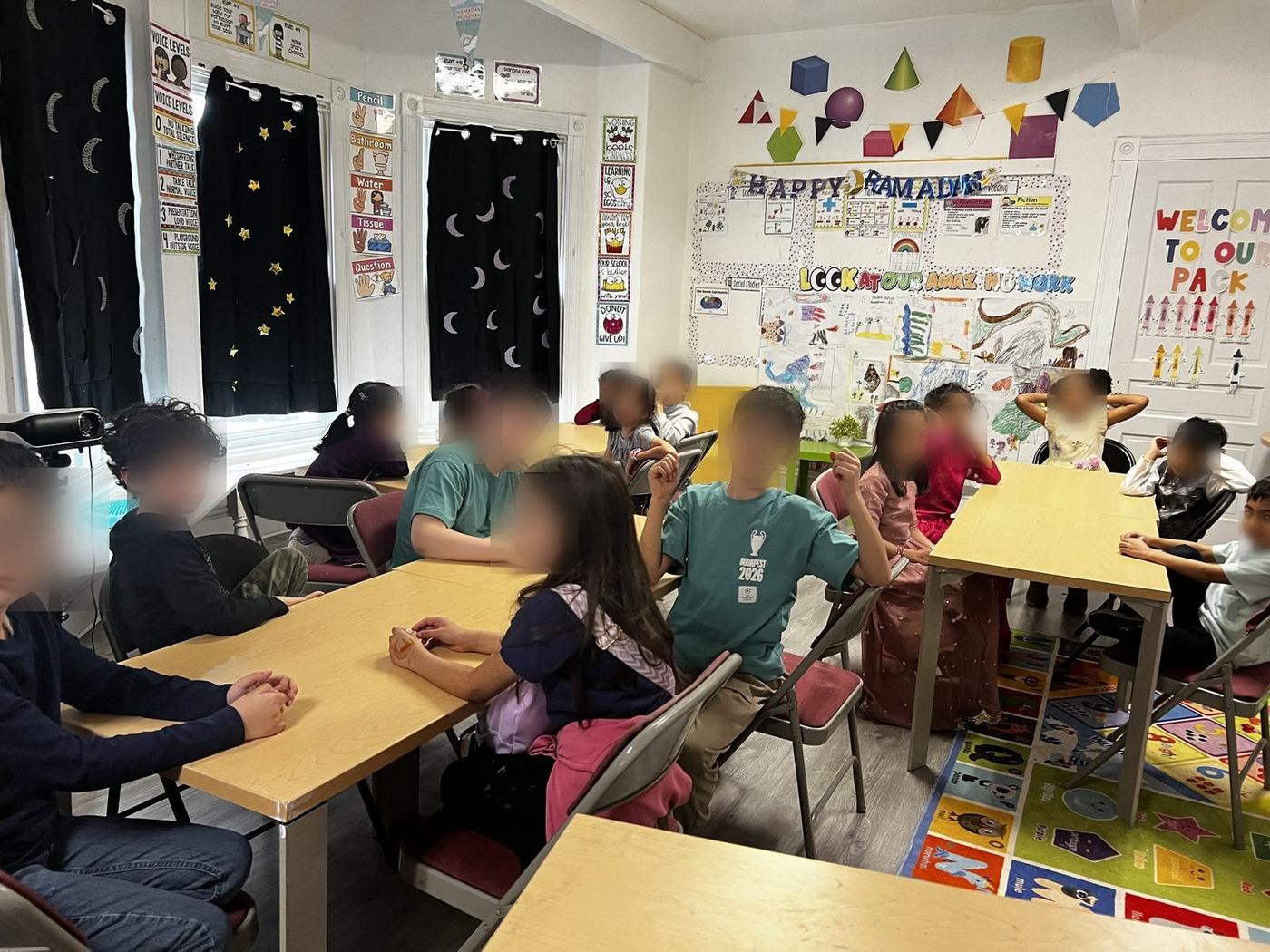
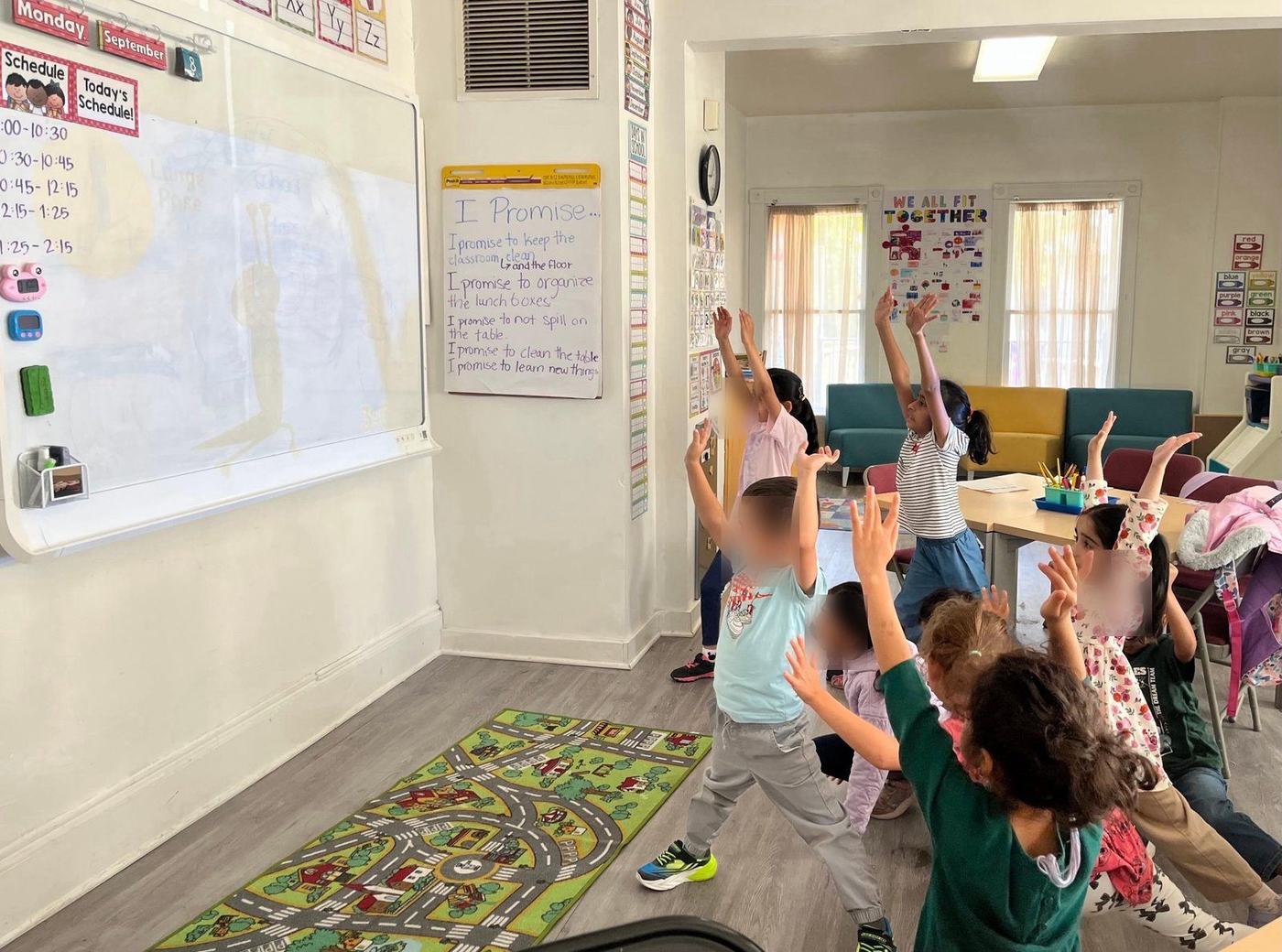
Give your child a chance to let out some steam and enjoy socializing with friends while exercising their muscles. This module is for kids who thrive with their peers or who need some extra social time away from home.
Students engage in supervised play and socializing with our provided play equipment, enjoy a home-packed lunch or snack, and participate in structured group activities led by our staff.
A note on schedules: class days and times shown for each course are tentative and reflect a typical year. Each year’s final schedule is shared with enrolled families before the term begins, insha’Allah.
A note on Art and PE: there are no dedicated Art or PE classes. Projects and extracurriculars provide rich evidence of learning in these domains for your homeschool portfolio.
Pick one course, or all six.
Most families start with the full package; others add exactly the modules their homeschool needs. Either way, your child is welcome here.